As the newly appointed Head of Asia Pacific, Ben Qin is leading Descartes Underwriting’s commercial strategy across one of the world’s most dynamic and diverse insurance regions. With nearly two decades of experience in the sector and a strong understanding of both Western and Asian market nuances, Ben brings a unique perspective to the evolving needs of brokers, partners and clients across APAC.
In this Q&A, Ben shares his insights on the opportunities in parametric corporate insurance, how Descartes is building local trust through global alignment, and why technology – and teamwork – are key to transforming risk solutions across Asia and Australia.

Congratulations on your new role! What excites you most about leading Descartes Underwriting's commercial initiatives across APAC?
It all comes down to the team and the strength of Descartes’ value proposition. We have ten people across the region, and it is truly inspiring to lead such a diverse and experienced team who are deeply passionate about the work we do. I have rarely seen a team so well aligned in purpose and mindset.
The team is dedicated to exploring innovative ways to model complex climate risks — and to close the growing protection gap. That is the spirit at the heart of our product and our value proposition.
I am particularly excited to see how demand for parametric insurance is expanding well beyond its traditional sectors such as energy, agriculture, and retail, into areas like hospitality, infrastructure, manufacturing, logistics, and PPPs or microfinance. This presents a tremendous opportunity for our APAC team to demonstrate the versatility of parametric solutions and to help broaden understanding of their value as a flexible and scalable approach to risk management.
What opportunities does having oversight of both the Asia and Australia insurance markets provide?
The Asia-Pacific region is remarkable for its diversity — not only geographically, but also culturally. Having grown up in China, immigrated to Australia during primary school, and spent the majority of my insurance career across APAC, I like to think I have a good grasp of both Eastern and Western cultures. This perspective is valuable because it reflects the reality of the region: there is no one-size-fits-all approach to insurance.
The insurance industry here is evolving rapidly, and because we hire local teams, our people bring deep local knowledge and networks — something that truly makes a difference. At Descartes, we prioritize partnerships with local brokers, supported by business developers who share similar backgrounds. This enables us to better understand, engage, and collaborate with our partners and clients.
At the same time, we benefit from the structure and strategic guidance of our Paris head office. Having a globally distributed team anchored by a strong headquarters gives us the best of both worlds: local agility and global consistency. We work closely and collaboratively across APAC, while also maintaining strong alignment with Paris and our carrier partners. I believe this balance is one of our greatest strengths.
Naturally, every country has its own insurance rules and regulatory frameworks. Our MGA operating model is designed to align with these local requirements — effectively providing a white-label capacity solution. This allows us to leverage existing infrastructure, including local licensing and regulatory frameworks, while bringing in the necessary capacity and support to help our partners deploy capital efficiently and cost-effectively.
What are some of the biggest opportunities and challenges for parametric insurance in the APAC region?
If you take Southeast Asia as an example, each country is very different in terms of its insurance economy and ecosystem. This diversity presents significant opportunities to design and develop solutions almost from scratch for our clients. Rather than starting from the traditional perspective of insurance products, the more effective approach is to ask: what specific risk problem are they truly seeking to solve?
We see companies becoming more sophisticated about risk, and there is now a growing community of professional risk managers — including our partners at PARIMA, the Pan-Asia Risk and Insurance Management Association.
On the product side, natural catastrophe-linked solutions remain at the heart of parametric insurance in APAC, particularly for typhoons, floods, and earthquakes in markets like Australia, China, Japan, and the Philippines. But what is exciting is the momentum in new areas: in Japan, earthquake covers continue to evolve; in Vietnam, renewable energy production guarantees linked to wind speeds are emerging; and in India and Southeast Asia, rainfall and satellite-based indices are helping protect agriculture against drought. These solutions are gaining traction because of the speed, transparency, and simplicity they bring to claims handling.
So overall, the opportunity in APAC is enormous, but success requires tailoring approaches to very diverse markets, investing in education and trust-building, and continuing to demonstrate the value parametric solutions can deliver.
How do you plan to manage and align operations across such diverse markets as Japan, Australia, Hong Kong, and Singapore?
To be honest, my working style will not change significantly — I already divide my time between Australia and Asia equally. Aside from the frequent travel, I rely heavily on the Descartes teams on the ground, each of whom has full autonomy to cultivate and strengthen their respective networks. I am fortunate to be supported by highly experienced professionals, including WeeBeng Seow in Singapore and Ikuya Shimada in Japan, both of whom, like myself, first became acquainted with Descartes during our time working as brokers.
We witnessed firsthand how responsive and effective the product could be, even at a time when Descartes was still in its early stages and parametric insurance had yet to become mainstream. I now see the APAC team working cohesively, drawing on each other’s regional experience and applying those insights within our own markets and networks.
How do you see technology changing the insurance landscape in APAC over the next five years? What innovations can clients in APAC expect from Descartes Underwriting in the near future?
Technology — and AI in particular — is a real game changer for insurance. A decade ago, you simply would not have dreamed of the solutions we have today. The technology, the data scraping, the machine processing power required to produce some of today’s solutions just did not exist.
At Descartes, we deploy AI across our risk analysis and underwriting. This ensures our parametric (re)insurance solutions are priced in line with real risk, reflect current climate conditions, and provide pre-agreed claims payments that are fast, transparent and fair.
Against the backdrop of climate change, traditional ways of assessing risk — relying only on historical experience — are no longer sufficient. New approaches are needed, based on the scientific analysis of billions of data points from new and diverse sources. AI, supported by enormous computing power, is essential to deliver accurate, actionable insights.
Last year, Descartes was awarded three million computing hours by the French state-owned entity GENCI – the controllership for three of the larger computing centres in France – to run complex physics-based models that simulate wildfire risk. This collaboration with GENCI enabled us to comprehensively improve our understanding of wildfire risk and pioneer wildfire coverage within a market where many conventional insurers refuse to underwrite policies due to the heightened uncertainty and frequency of wildfire incidents.
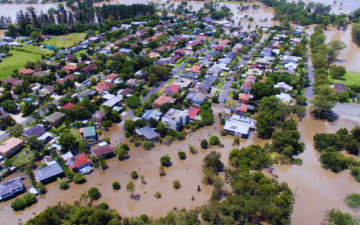
Looking specifically at Asia-Pacific, one of the priorities for the region is addressing the increasing prevalence of flooding in high-density urban areas. Cities like Shanghai, Bangkok, and Ho Chi Minh City rank among the most flood-prone globally. Developing innovative flood protection is critical, and our parametric flood-at-location product is an example of how we are tackling this. This is triggered by water levels recorded directly at the insured site through sensors, with AI helping us interpret the data and anticipate how flood risks are evolving.
Descartes’ strength lies in its deep technological foundation, which has been central to the company’s approach since its inception in 2018. This technology-driven approach gives Descartes the infrastructure and resources to view risk differently from other insurers and reinsurers.